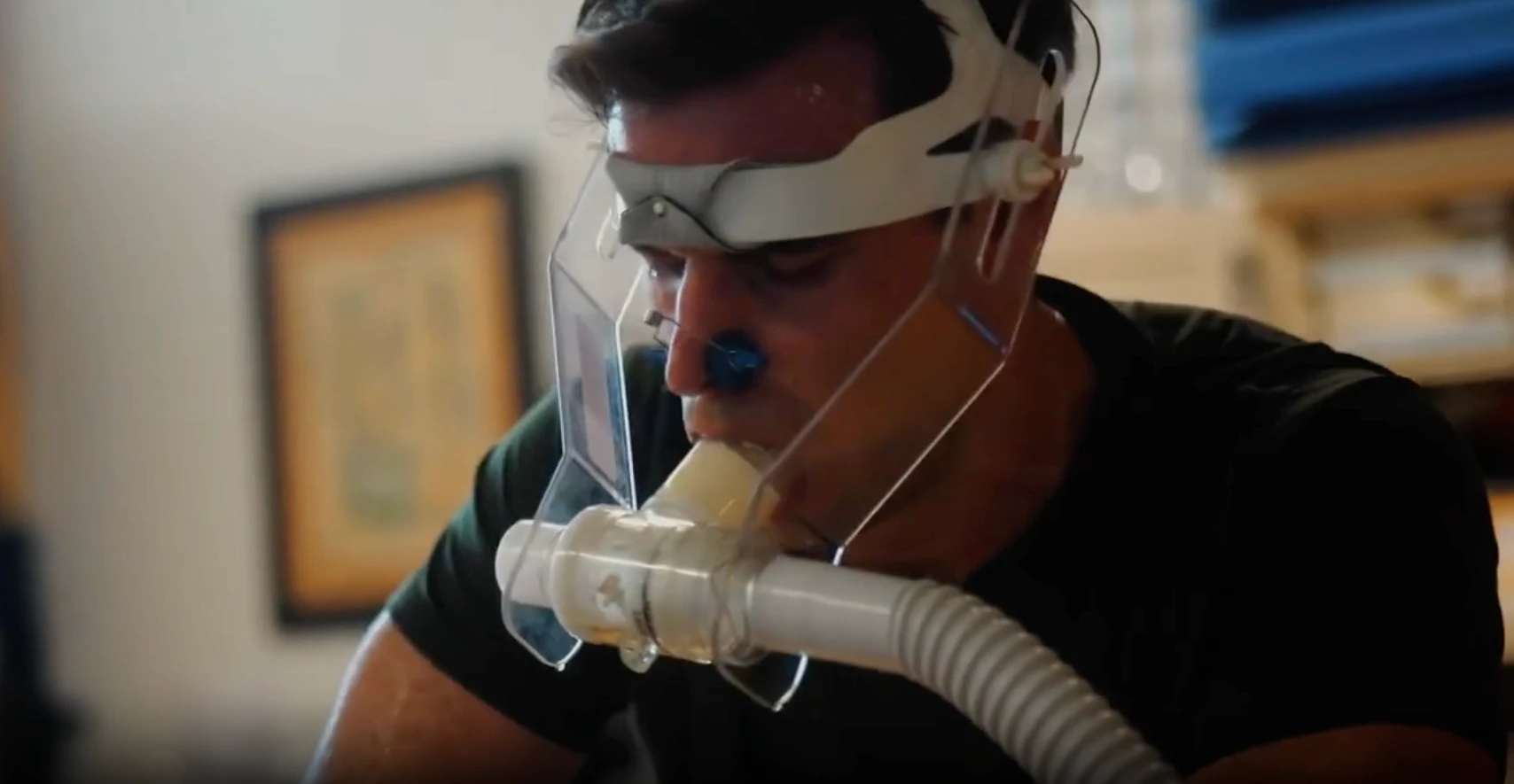
New research out in PNAS elucidates how exercise shunts glucose and amino acids away from the tumor and towards muscle... and baseline fitness is a strong predictor of this balance.
A mere 3.3 years after I defended my PhD, the final paper from my thesis work was finally published in PNAS last week (in large part thanks to the heroic work from my PI and lab to get it through the finish line).
Here is a brief overview:
How does fitness, and regular exercise, impact cancer outcomes?
We’ve known for years—from epidemiology, clinical trials, and animal models—that regular aerobic exercise and higher cardiorespiratory fitness are linked to better cancer outcomes. People who are more active tend to have lower cancer incidence, slower progression, and better survival across multiple tumor types. What’s been harder to pin down is why. The molecular “middle steps” between exercise and tumor behavior remain fuzzy, especially when we think about metabolism.
Tumors are famously hungry. Since Warburg’s early observations, it’s been clear that many cancers rely heavily on glucose to fuel growth. At the same time, skeletal muscle is the body’s largest site of glucose disposal and oxidative metabolism—especially in response to exercise. That raised a key possibility: maybe exercise doesn’t just help the host broadly—it may actively compete with tumors for fuel.
We designed this study to test that idea using voluntary wheel running (a low-stress, aerobically relevant model) and a suite of metabolic readouts: glucose uptake, glucose oxidation into the TCA cycle, targeted metabolomics, stable isotope tracing, and transcriptomics. We also incorporated VO₂peak, a gold-standard measure of aerobic capacity, so we could look beyond a simple “exercise vs no exercise” binary and ask how fitness level itself shapes tumor metabolism.
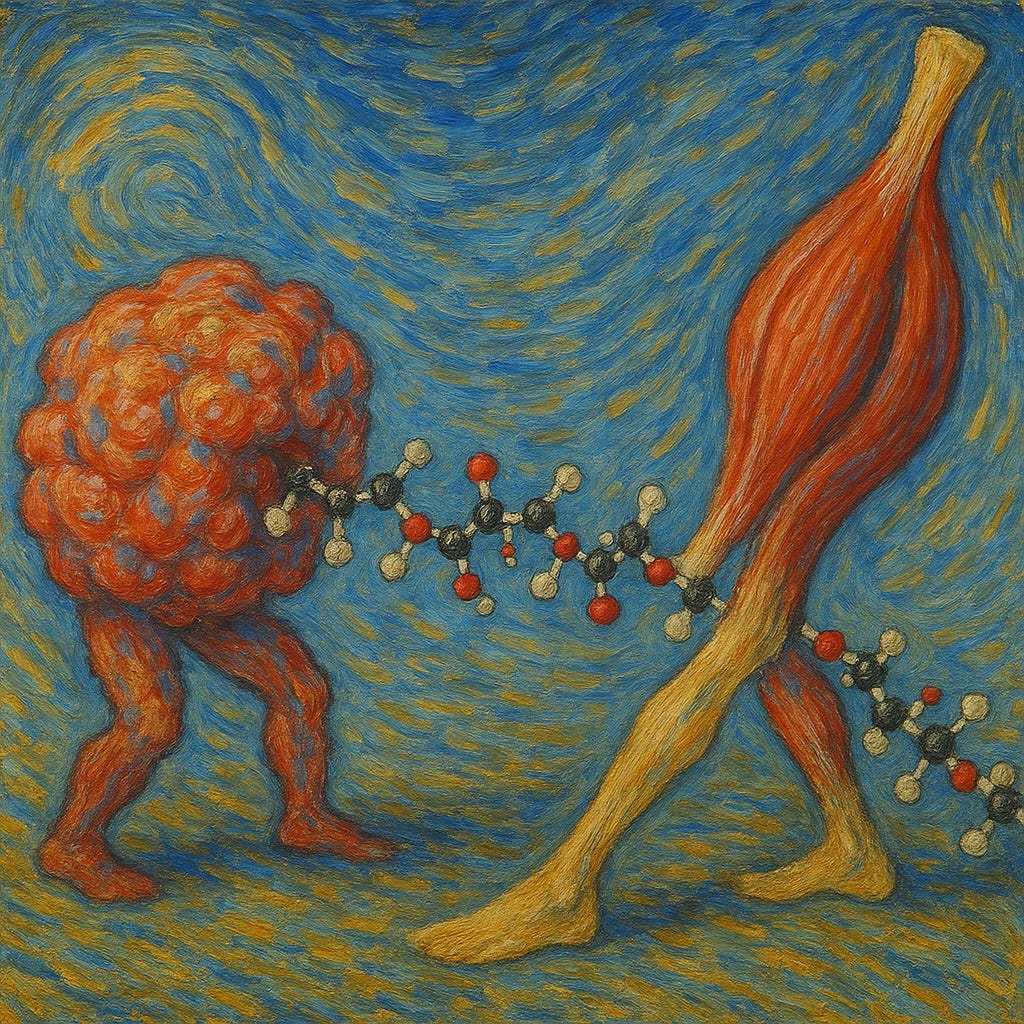
The metabolic tug of war for nutrients between muscle and tumor is shifted towards muscle by regular exercise
Five Key Findings from the Research
1) Voluntary aerobic exercise dramatically slowed tumor growth—up to 60% in obese mice
In an obese breast cancer model, mice exposed to voluntary wheel running showed ~60% smaller tumors compared with sedentary obese controls. Exercise also improved body composition and normalized glucose/insulin levels relative to sedentary obese mice.
This is important because obesity is a strong driver of breast cancer progression, and the magnitude of tumor slowing here suggests exercise can counteract that risk environment.
2) Exercise “repartitioned” glucose away from tumors and toward muscle/heart
When we measured tissue glucose uptake using ²-deoxyglucose, exercise increased glucose uptake in skeletal and cardiac muscle, while decreasing uptake in tumors—both after an acute bout and at baseline after training.
In other words, exercise changed who gets the fuel. The host tissues became stronger glucose competitors, and tumors got less.
3) Exercise shifted glucose oxidation away from tumors and toward muscle/heart
Using [U-¹³C₆]glucose infusions, we quantified how much glucose actually fed oxidative metabolism (entry of glucose carbons into the tricarboxylic acid (TCA) cycle, AKA Kreb’s cycle). Exercise increased glucose’s contribution to the TCA cycle in muscle and heart, but reduced glucose oxidation in tumors.
So the repartitioning wasn’t superficial—exercise changed both glucose entry into tissues and its downstream fate.
4) The benefit generalized across tumor types and scaled with exercise dose/timing
We replicated the core effect in a melanoma model, a tumor less classically tied to obesity. Exercise again reduced tumor size and tumor glucose metabolism. Even more interesting: mice that exercised before tumor implantation (“prehab”) had greater tumor suppression than those starting at implantation (“rehab”).
This supports an exercise dose-response concept and suggests that being fit before cancer develops can shape the metabolic terrain tumors encounter.
5) Fitness level predicted opposing metabolic signatures in muscle vs tumor
Looking beyond exercise exposure alone, VO₂peak correlated with metabolite patterns in opposite directions in muscle and tumor. For example, higher fitness was linked to lower tumor aspartate content and glutamine-to-aspartate synthesis, while muscle showed the reverse pattern.
This finding matters because it implies a continuum: the fitter the host, the less favorable the metabolic environment for tumor energetics. It also gives us a translational handle—fitness is measurable and modifiable in humans.
The Metabolic Model of Exercise’s Anti-Cancer Effects
Aerobic exercise and higher fitness enhance host tissue glucose demand and oxidation, creating a metabolic competition that constrains tumor fuel access and slows progression.
A few aspects feel especially exciting going forward:
Metabolic competition as therapy. Exercise isn’t just “good for you” in a generic way—it may be an active metabolic intervention that reshapes nutrient flows in the tumor–host ecosystem.
Fitness as a biomarker. VO₂peak helped explain heterogeneity in tumor metabolism far better than a binary exercise label. That suggests real clinical utility for tailoring or monitoring exercise oncology interventions.
Glucose appears to be the main lever. Transcriptomic changes suggested shifts in amino-acid pathways, but metabolite changes there were modest. The glucose story, by contrast, was robust across models and methods.
Timing matters. The stronger effect in prehab models mirrors what we see clinically: higher pre-diagnosis or pre-treatment fitness predicts better outcomes, and building fitness early may pay dividends later.
Of course, there are limitations—rodent exercise dose can vary, and we didn’t have human tumor metabolomics to pair with the clinical transcriptomic comparisons. But the convergence of fluxomics, metabolomics, and tumor growth phenotypes gives us confidence that this metabolic repartitioning mechanism is real and worth testing directly in people.
Source: VO Health CEO Brooks Leitner's Substack: Read More Here

Written by
Brooks Leitner, MD PhD
Reading Time
7min